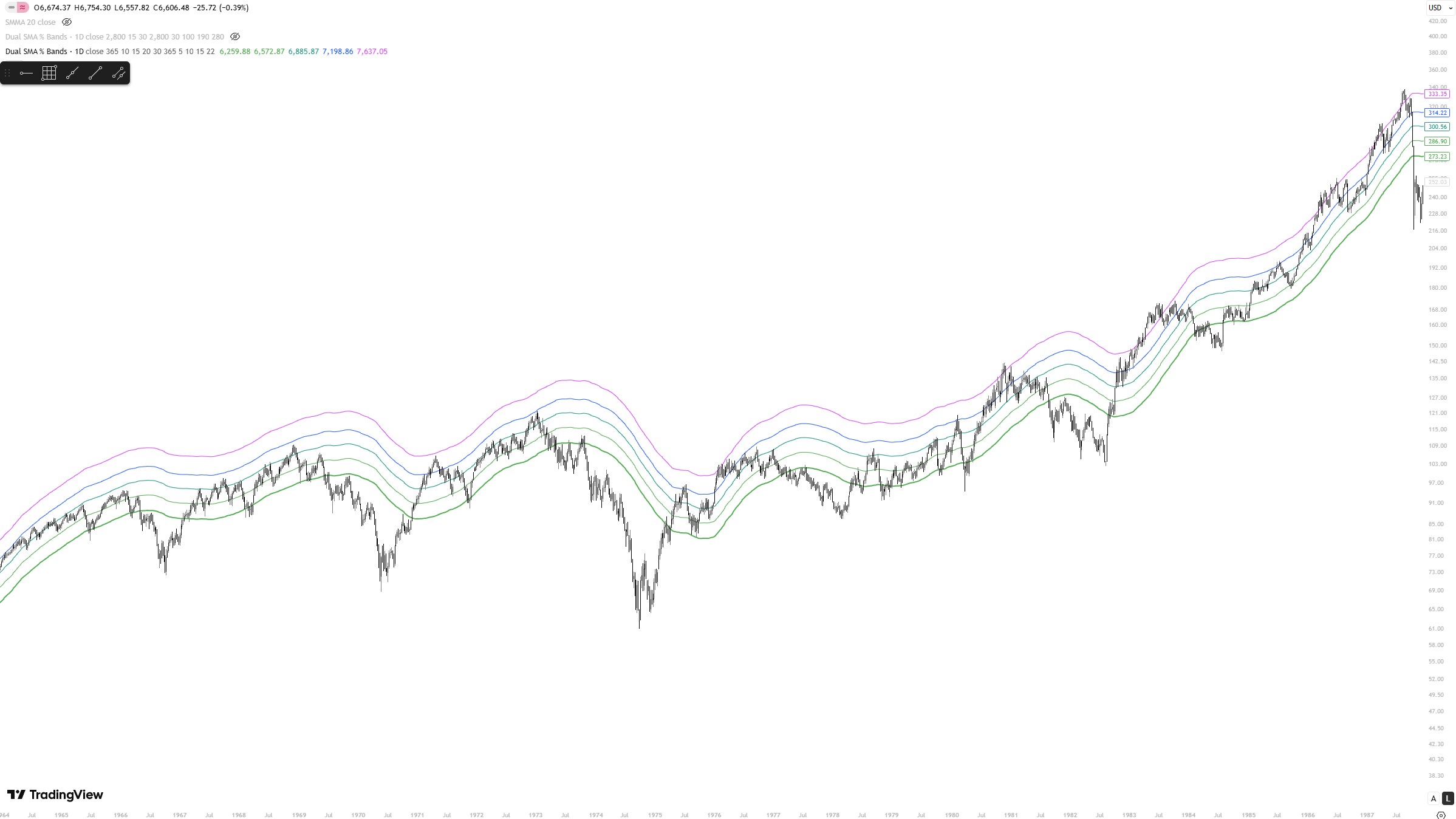
A long-horizon study examining how percentage deviations from the 365-day moving average can be used to forecast future risk conditions on the SPX.
This material is provided for general informational and educational purposes only. It does not constitute financial advice or a recommendation.
This case study contains 2 sections. The first details how percentage deviations below the 365-day mean signal accumulation conditions. The second covers how deviations above it signal distribution risk.
The reference framework explored includes:
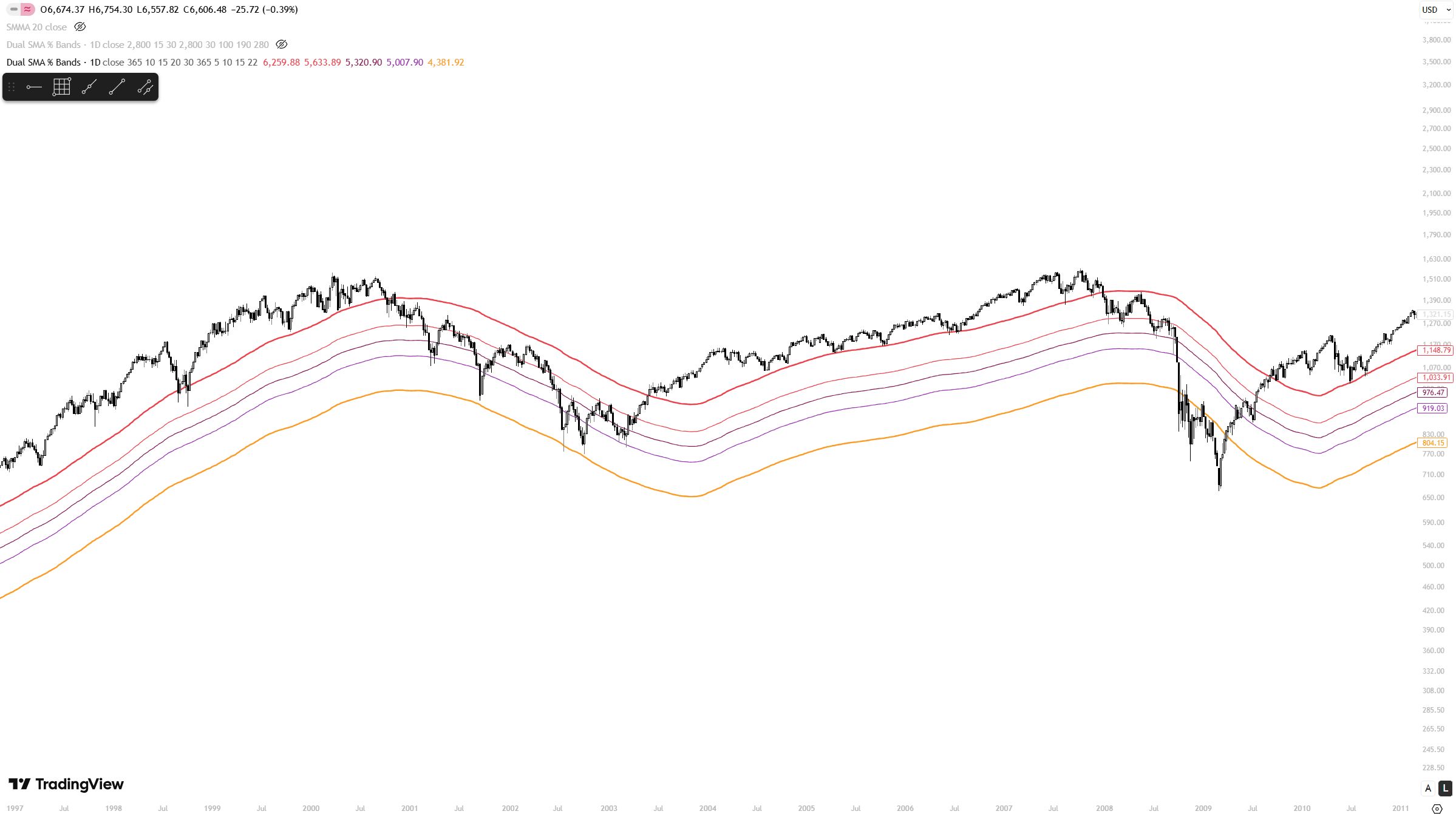
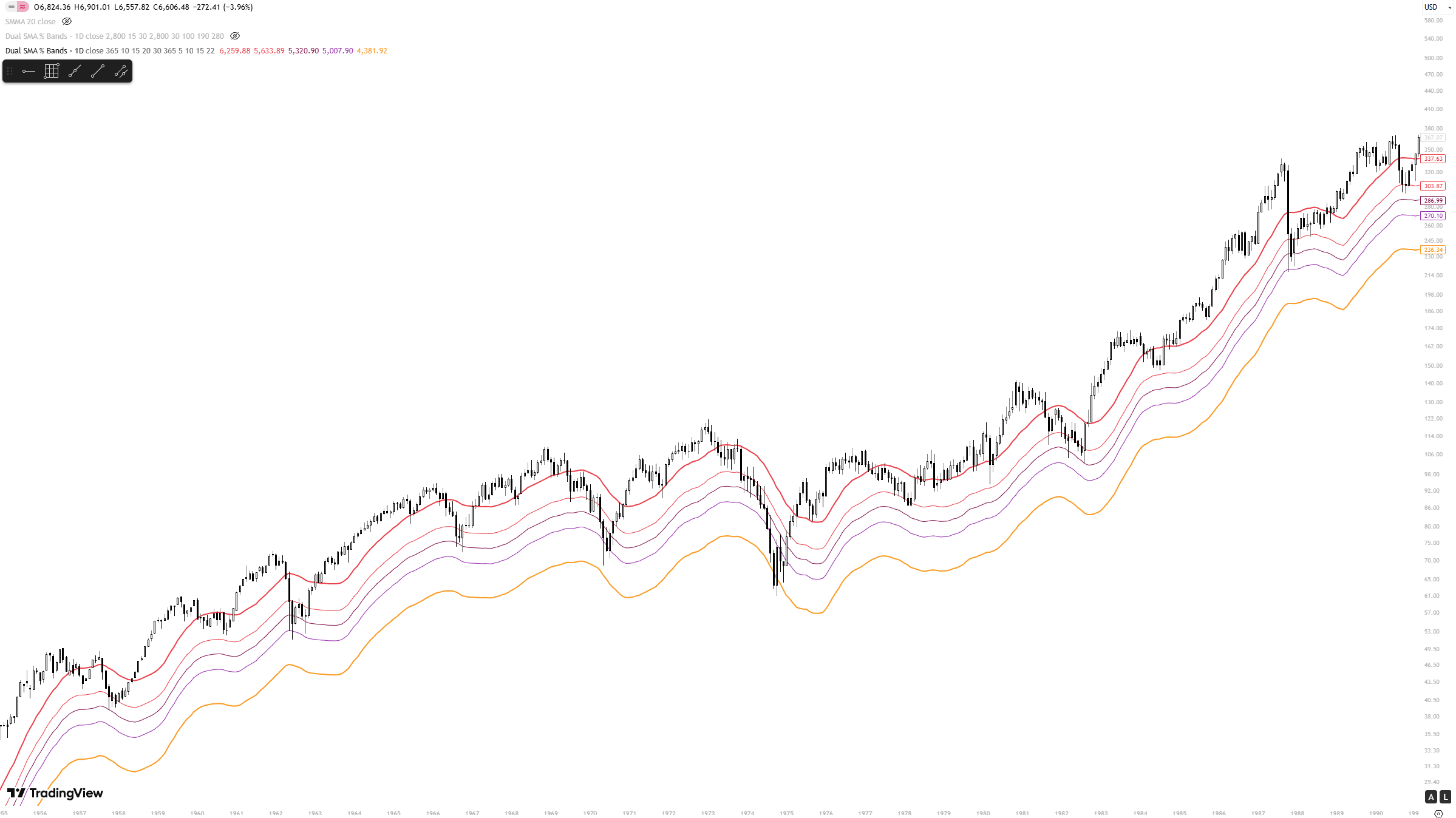
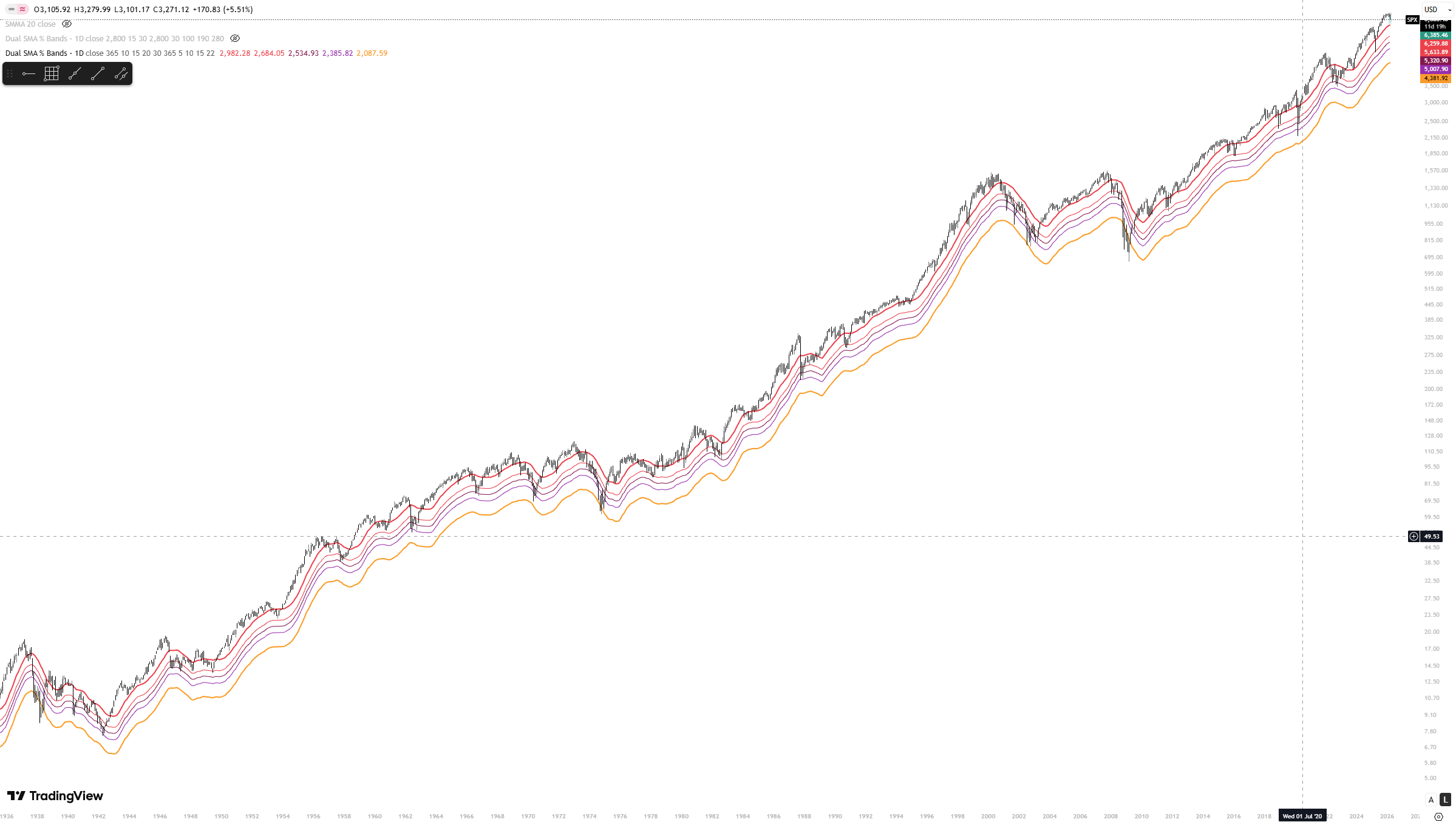
When the SPX trades below its 365-day mean, it enters zones where long-term risk has historically been skewed to the upside. The bands at 10%, 15%, 20%, and 30% below the yearly average define a tiered accumulation map, each level representing a progressively rarer dislocation from trend.
These are not buy signals. They are conditions that, across nearly nine decades of data, have consistently preceded above-average returns. The deeper the breach, the stronger the historical precedent. (Zoom in to view charts)
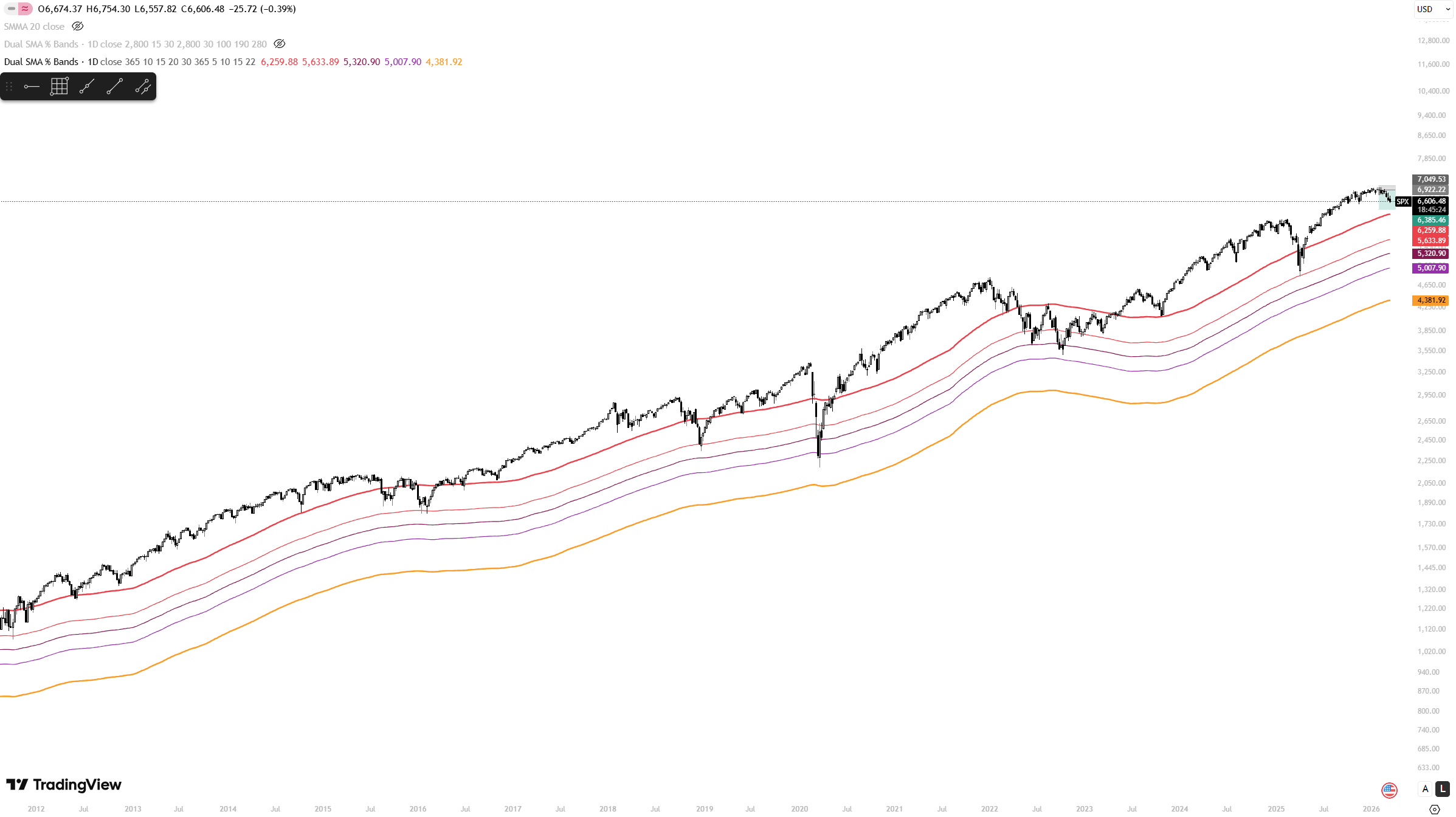
Across all regimes, the framework holds a consistent read: the 10-15% zone flags elevated long-term value; the 20-30% zone has marked generational entry conditions. In the post-2009 bull market, corrections have rarely breached the 15% band, making any such reading a significant signal going forward.
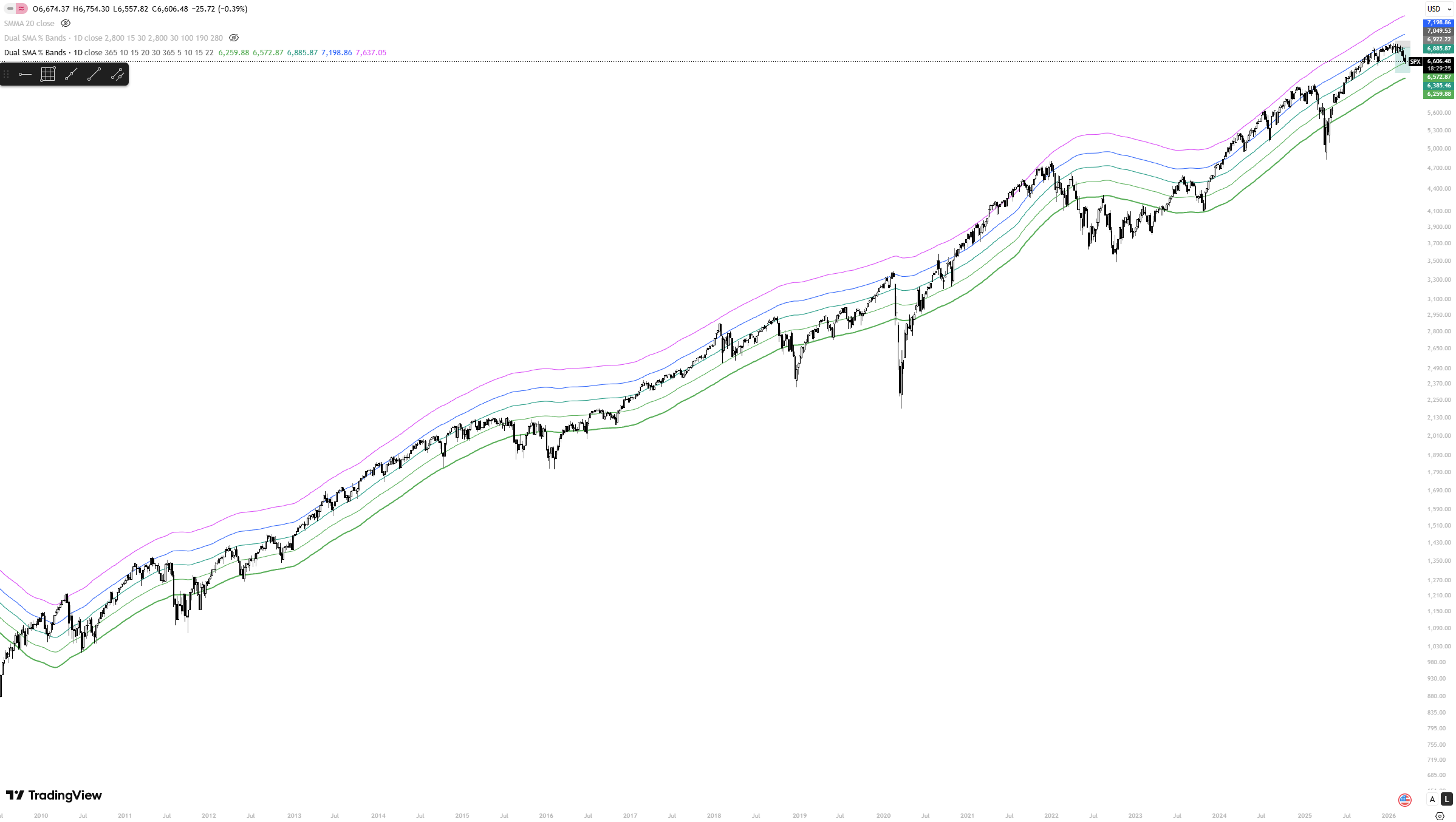
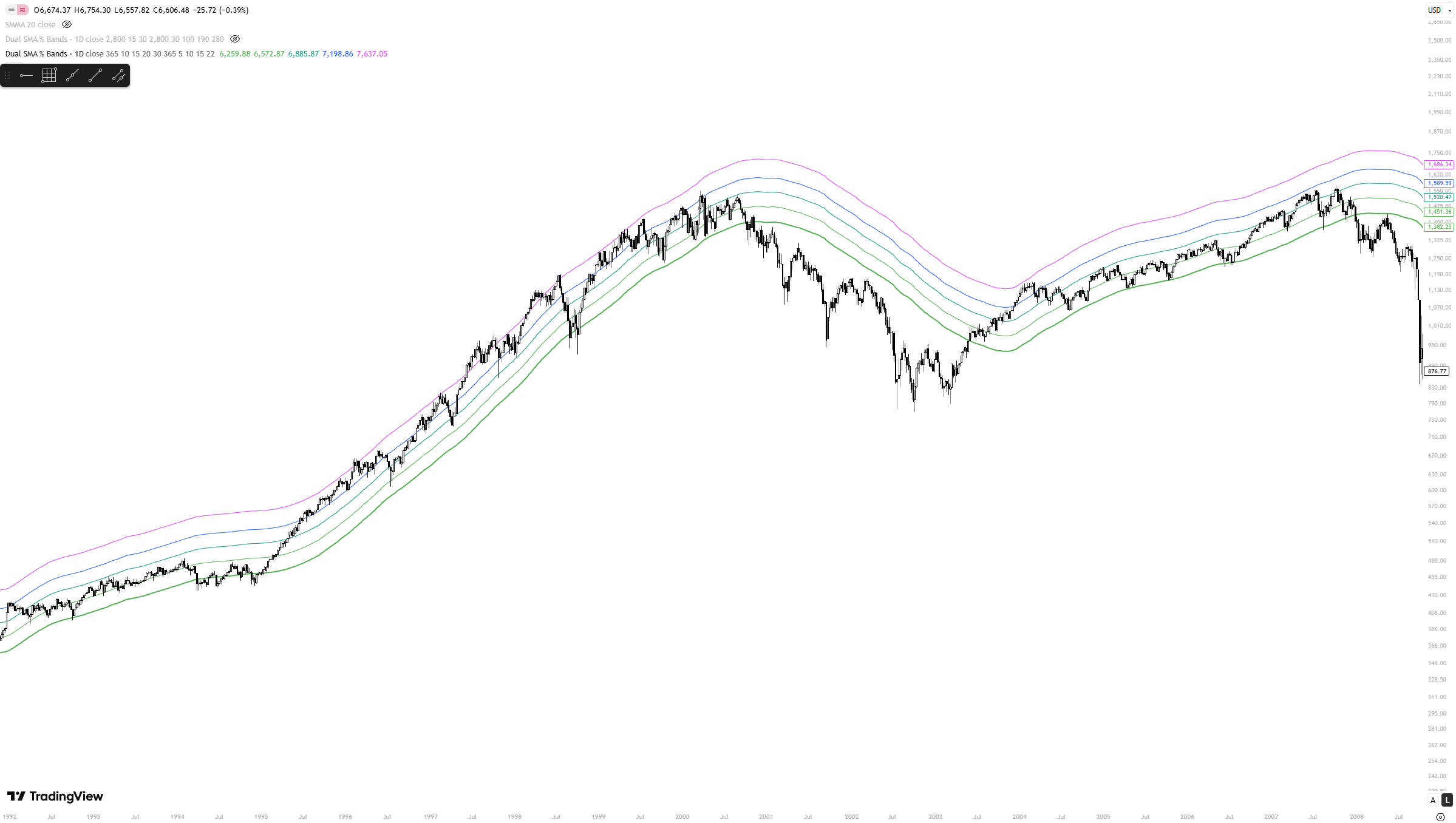
When the SPX trades above its 365-day mean, forward risk increases. The extension bands at 5%, 10%, 15%, and 22% above the yearly average map the degree of overextension and with it, the probability of a correction compressing returns over the following period.
The 5-10% zone is common in healthy bull markets. It is the 15-22% zone that historically coincides with speculative excess and precedes the sharpest drawdowns. These readings do not predict timing. They define elevated-risk conditions.
Together, the two band sets create a single risk map centred on the 365-day mean:
These bands are a risk lens, not a timing tool. Their value is in defining the condition of the market relative to its long-run trend, which shapes position sizing, risk appetite, and time horizon decisions.
Used alongside other indicators such as macro regime analysis and market breadth, they become a meaningful input into a forward-looking risk framework.